Two Ways Tanzanian Cocoa Farmers Are Being Paid More — and Neither Involves Waiting for World Prices
Published 26 September 2026 · Commodities.tz Editorial
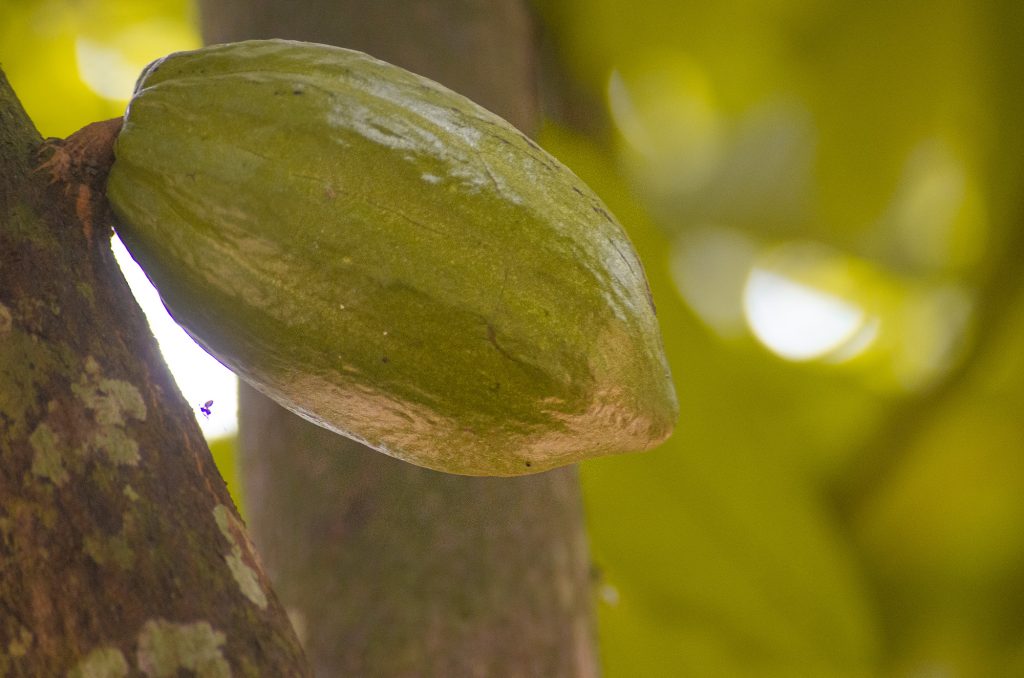
Global cocoa prices get most of the attention in coverage of farmer incomes, but two working examples in Tanzania show that how a region organizes processing and payment can matter as much as what the futures market is doing. Neither model waits on world price cycles; both are structural bets that better quality control, captured and paid for locally, raises farmer income on its own terms.
Model one: a private fermentery buys unfermented beans
Kokoa Kamili, founded in 2012–13 in the Kilombero Valley of Morogoro Region, works from a simple premise: smallholders fermenting and drying cocoa individually, on quarter- to two-acre plots, produce inconsistent quality and get paid accordingly by middlemen with little incentive to reward improvement. Kokoa Kamili instead buys “wet,” unfermented beans straight from farmers — skipping their labor and guesswork entirely — and performs fermentation and drying itself at a central facility, using a monitored six-day ferment in tiered wooden boxes followed by full sun-drying on raised tables.
The company now works with more than 5,000 smallholders, most farming between half an acre and two acres of cocoa, and pays a premium substantially above prevailing market rates for their wet beans — in its first year of operation, farmers in the Kilombero Valley reportedly went from receiving some of the lowest cocoa prices in Tanzania to the highest, a reversal other regional buyers have since had to match to stay competitive. According to 2025 sourcing data published by U.S. chocolate maker Dick Taylor Craft Chocolate, Kokoa Kamili’s farmgate price that year was $12.89 per kilogram for wet beans, while Dick Taylor’s own purchase price for the finished fermented, dried beans was $15.50 per kilogram — described as 76% above prevailing commodity cocoa price at the time. The gap between the two figures covers Kokoa Kamili’s fermentation, drying, quality control and organic certification costs — the value it adds between the farm gate and an export-ready bean.
Model two: a cooperative taxes itself to build a factory
Kyela District in Mbeya Region, which supplies roughly 80% of Tanzania’s cocoa, is pursuing a different structure entirely. Rather than route farmer income through a private buyer’s premium, the Kyela Cocoa Farmers’ Cooperative Union (KYECU) launched a self-financing levy in 2025: 50 Tanzanian shillings deducted from every kilogram of cocoa sold through the union. That levy raised over TZS 500 million in its pilot phase, which the union has so far spent on quality-control equipment — moisture meters, digital scales and tablets for its primary societies — with a local roasting-and-pressing factory targeted for completion within two years. The union’s broader plan for the year ending March 2027 sets a cocoa production target of 9 million kilograms at a reference price of TZS 10,000 per kilogram, aiming for roughly TZS 90 billion in cocoa revenue for the district.
Same problem, opposite ownership structure
Both models are answering the same underlying question — how does a smallholder capture more value than a purely commodity farmgate sale offers — but they place ownership of the solution in different hands. Kokoa Kamili is a private company whose margin depends on maintaining better quality than competitors and passing part of that premium back to farmers to secure supply. KYECU is farmer-owned, funding its own infrastructure out of members’ current sales in the hope of capturing processing margin later rather than a private intermediary. Kokoa Kamili’s model has a decade of track record and a documented price history; KYECU’s factory is still a plan with a two-year timeline and, so far, spending only on quality-control instruments rather than processing equipment itself.
For anyone assessing Tanzanian cocoa sourcing risk or opportunity, the two models are worth watching as a pair rather than separately: one shows what centralized fermentation is worth in price terms today, the other shows what a farmer-owned attempt to move further up the value chain looks like while still under construction.
- Tanzania Sourcing — Dick Taylor Craft Chocolate — https://dicktaylorchocolate.com/pages/tanzania-sourcing — 2026-09-26
- Kokoa Kamili — Meridian Cacao Co. — https://meridiancacao.com/blogs/origins/kokoa-kamili — 2026-09-26
- A Fair Price for Cocoa in Tanzania — TechnoServe — https://www.technoserve.org/blog/a-fair-price-for-cocoa-in-tanzania/ — 2026-09-26
- Cocoa farmers in Tanzania launch processing plant initiative to boost value addition, earnings — Food Business Africa — https://www.foodbusinessmea.com/cocoa-farmers-in-tanzania-launch-processing-plant-initiative-to-boost-value-addition-earnings/ — 2026-09-26
- Kyela eyes Sh100bn from four crops as farmers assured of market, prices — The Citizen — https://www.thecitizen.co.tz/tanzania/business/kyela-eyes-sh100bn-from-four-crops-as-farmers-assured-of-market-prices-5327184 — 2026-09-26