Tanzania Cacao & Cocoa: Market, Origins & Sourcing Guide
Overview
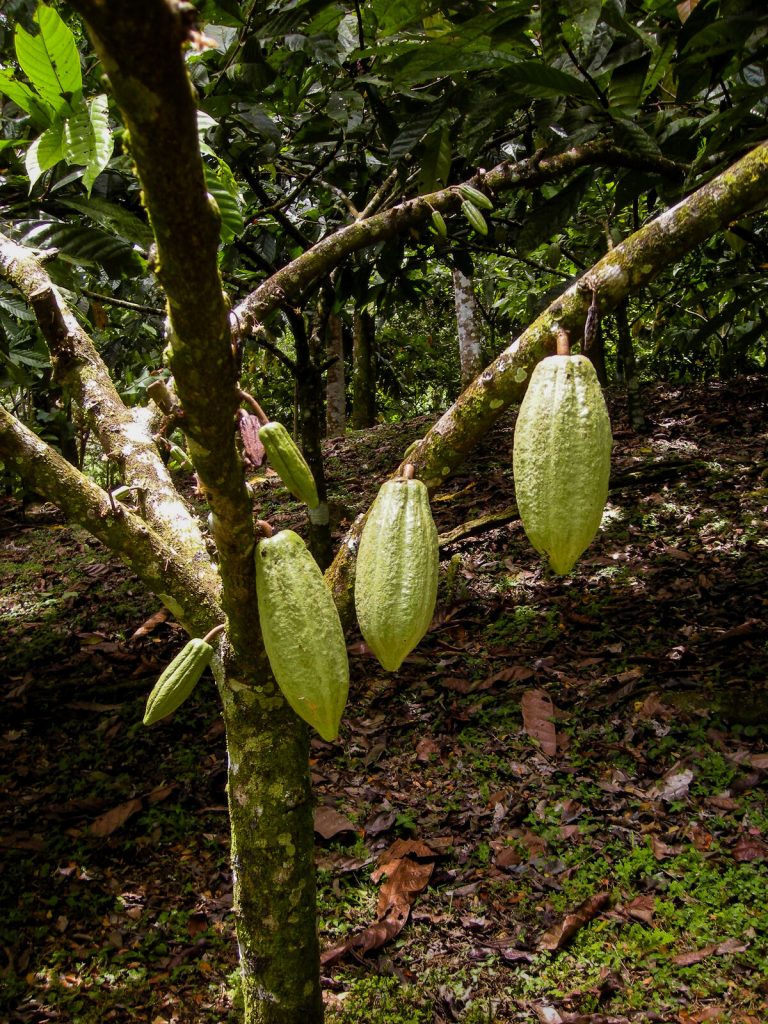
Tanzania is not, and does not claim to be, a major cacao power. Against West Africa’s giants — Côte d’Ivoire and Ghana together account for roughly half of world cocoa bean output — Tanzania’s production is a rounding error: FAO-derived data place Tanzania at 15,000 tonnes in 2024, ranking around 21st–23rd globally and representing about 0.3% of world production. Tanzania’s Cereals and Other Produce Regulatory Authority (COPRA) has cited different figures for different years — around 12,000 tonnes in 2023 and roughly 17,000 tonnes in 2025 — a reminder that Tanzanian cocoa statistics vary by source and year. What Tanzania lacks in scale, growers and specialty buyers argue it partly offsets in terroir: pockets of genuinely distinctive, fruit-forward flavor have drawn interest from boutique and bean-to-bar chocolate makers, even as most of the crop still moves as undifferentiated raw beans.
Production & Growing Regions
COPRA identifies four main producing regions — Mbeya, Morogoro, Tanga and Songwe — with smaller volumes in Kagera. Within Mbeya, the Kyela and Rungwe districts (bordering Lake Malawi) dominate, accounting for the large majority of national output (estimates range roughly 90–95%+). Morogoro’s Kilombero Valley is the second notable center, home to specialty fermentary Kokoa Kamili and a growing reputation for red-fruit, floral flavor notes. Tanga’s Usambara Mountains area is the historical seat of cocoa in Tanzania, tracing to German colonial-era plantings in the late 19th century, though no longer a major volume producer. Kigoma is sometimes mentioned as climatically suitable, but there is no verified evidence of active commercial production there.
Fermentation & Drying
Fermentation and drying are the steps that most determine whether Tanzanian cacao reaches specialty quality or is sold as generic bulk beans. Smallholders traditionally ferment and dry cacao on their own farms — heaping or box-fermenting for several days before sun-drying on mats or raised beds — with wide variation in consistency from farm to farm. Kokoa Kamili, founded in 2012 in the Kilombero Valley, buys wet (unfermented) beans directly from farmers and performs fermentation and drying centrally, credited with materially raising and standardizing quality. COPRA announced plans (as of March 2026) to build seven government cocoa-drying facilities by June 2026, expanding to twenty the following financial year.
Quality and Grading
There is no widely documented, cocoa-specific national grading scale for Tanzania comparable to major origins. The Tanzania Bureau of Standards has developed technical standards touching cocoa products (moisture content methods, a cocoa powder specification) but these are product-safety/composition standards, not a public raw-bean quality-grading system. In practice, buyers and exporters apply conventional international criteria (fermentation completeness, moisture, bean size uniformity, defect/mould counts). Specialty buyers describe flavor notes ranging from almond, wood and light tobacco/leather in Mbeya-origin beans to red fruit, berry and floral notes in Kilombero Valley beans — trade-sourced observations rather than a formal cupping standard.
Processing Chain
Fermented and dried beans are cleaned, roasted and winnowed into cocoa nibs, ground into cocoa liquor (cocoa mass), then optionally pressed into cocoa butter and cocoa powder. Tanzania has historically exported almost entirely at the raw-bean stage. That is beginning to change on a small scale: in mid-2025, Kyela cocoa farmers (via KYECU cooperative) launched a self-financed local processing facility funded partly by a farmer levy, and the government’s 2026 revival strategy lists domestic value addition as one of five pillars, with plants reported under construction in Rungwe and Kyela.
Market Structure
Unlike coffee, cashew, cotton, sisal, tobacco, tea and sugar — each with its own dedicated regulatory board — cocoa falls under COPRA, a broader body overseeing numerous “other” scheduled crops, reflecting its relatively minor institutional status. The traditional trading structure is multi-tiered and informal: smallholders sell to local agents, who sell to exporters, offering farmers little price incentive or quality feedback. Buyer-led alternatives have emerged — Kokoa Kamili’s direct farmgate purchasing (reported at roughly 24% above prevailing local rates) is the most cited example, alongside NGO programs such as TechnoServe’s Irish Aid-funded work.
Trade and Export Context
World Bank/UN Comtrade data show Tanzania exporting about 12,162 tonnes of raw/roasted cocoa beans worth roughly $39.0 million in 2023, with Indonesia and Malaysia the largest destinations by value, followed by the Netherlands, India and Belgium. A broader “cocoa and cocoa preparations” category was reported at roughly $103.4 million for 2024 — not directly comparable to the narrower 2023 bean figure. The sector experienced a sharp price dislocation in early 2026: domestic auction prices that had reached roughly TZS 32,000–36,000/kg fell to around TZS 5,540/kg, well below the government’s TZS 10,000/kg target, attributed to global oversupply after Côte d’Ivoire and Ghana recovered from earlier shortfalls. In response, the government’s strategy targets raising national production to 80,000 tonnes by 2030 — an ambitious target against a current base of 12,000–17,000 tonnes.
Current Market
| Market | Type | Grade | Price | Observed | Source |
|---|---|---|---|---|---|
| ICE cocoa futures (London/New York close) | International | Futures reference, not Tanzania-specific | USD 5,605.00/tonne | 24 Sep 2026 | Trading Economics (ICE cocoa futures) |
| Tanzania national | Export | — | USD 7.30/kg | 1 May 2026 | UN Comtrade unit value (via Selina Wamucii) |
| Tanzania national auction | Auction | Latest auction, unspecified | TZS 5,540.00/kg | 1 Mar 2026 | Government of Tanzania (via The Citizen) |
| Tanzania national auction, historical peak | Auction | — | TZS 34,000.00/kg | 1 Dec 2025 | Government of Tanzania (via The Citizen) |
- Wikipedia (FAOSTAT-sourced) — List of countries by cocoa production — https://en.wikipedia.org/wiki/List_of_countries_by_cocoa_production — 2026-09-24
- The Citizen — Government outlines measures to revive cocoa amid sharp price drop — https://www.thecitizen.co.tz/tanzania/news/national/government-outlines-measures-to-revive-cocoa-amid-sharp-price-drop-5382922 — 2026-09-24
- World Bank / UN Comtrade (WITS) — Tanzania Cocoa beans exports by country, 2023 — https://wits.worldbank.org/trade/comtrade/en/country/TZA/year/2023/tradeflow/Exports/partner/ALL/product/180100 — 2026-09-24
- Trading Economics — Tanzania cocoa, cocoa preparations exports — https://tradingeconomics.com/tanzania/exports/cocoa-cocoa-preparations — 2026-09-24
- TechnoServe — Reviving Cocoa in Tanzania — https://www.technoserve.org/our-work/projects/reviving-cocoa-in-tanzania/ — 2026-09-24
- Food Business Middle East & Africa — Cocoa farmers in Tanzania launch processing plant initiative — https://www.foodbusinessmea.com/cocoa-farmers-in-tanzania-launch-processing-plant-initiative-to-boost-value-addition-earnings/ — 2026-09-24
- Tanzania Bureau of Standards — Determination of Moisture in Cocoa Products — https://www.tbs.go.tz/uploads/publications/en-1674638746-determination%20of%20moisture%20in%20cocoa%20products.pdf — 2026-09-24